Is this recipe Mediterranean? Paste it and find out.

A link or the recipe text is enough. Five Olives scores it for the Mediterranean diet and for health, checks it against everyone you cook for, and rewrites it into a healthier version your family will still eat.

Coming soon to theApp StoreTry a dish first

3 free analyses, no account. For iPhone.

Try it on a dish you know

These are real results from the app for one family of four: Sam doesn't eat pork and wants less saturated fat, Alex wants more protein, and the kids won't eat anything spicy. Pick a dish.

Choose a dish
Version of Spaghetti carbonara

Spaghetti carbonara

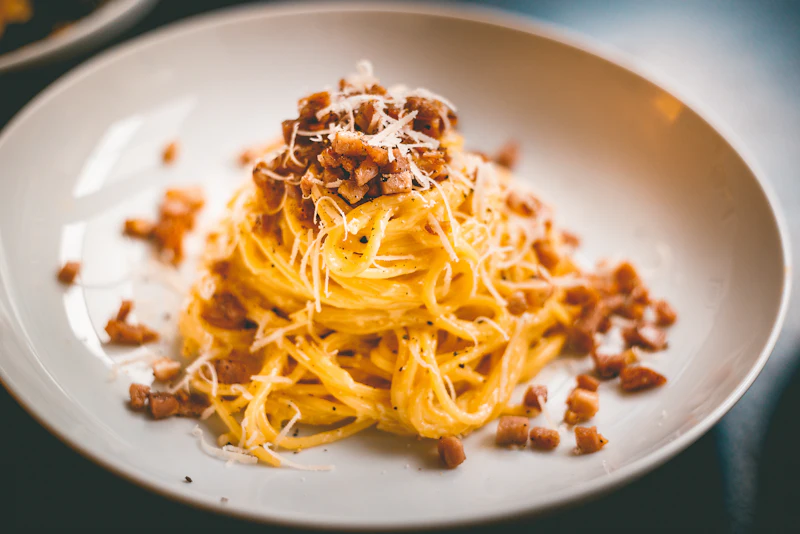
A plate of spaghetti carbonara with crisp pieces of guanciale
  • Against: Guanciale or pancetta is cured pork: about 38 g of processed meat per serving, the kind of meat MEDAS asks you to keep under one serving a day.
  • Against: The dish has no vegetables at all, so it contributes nothing to the 2+ daily vegetable servings MEDAS asks for.
  • Against: No olive oil is used. The fat comes from rendered pork fat, egg yolks and pecorino.
Show the full analysisShow less

More reasons

  • Against: About 14 g saturated fat per serving, from guanciale, pecorino and egg yolks. That's over half the roughly 22 g daily limit for a 2,000 kcal diet.
  • Against: About 2.5 g salt per serving, from cured guanciale, pecorino and the salted pasta water. That's half of the daily 5 g limit.
  • Against: Only about 4 g fibre per serving from refined white spaghetti, well short of the daily 25 g.
  • For: About 32 g protein per serving from eggs, pecorino and guanciale, and no ultra-processed ingredients.

For this household

  • Sam: Constraint brokenThe 150 g of guanciale or pancetta is pork, which Sam doesn't eat.
  • Sam: Goal missedGuanciale, pecorino and 4 egg yolks give about 14 g saturated fat per portion, which works against Sam's goal of eating less saturated fat.
  • Alex: Goal servedEggs, pecorino and guanciale give about 32 g protein per portion, which serves Alex's protein goal.
  • Everyone: PracticalThe dish is ready in about 20 minutes and makes 4 servings, well within the 40-minute weeknight limit.

Swaps

  1. HighReplace the 150 g guanciale with 200 g diced chicken breast or 150 g hot-smoked salmon, browned in 1 tbsp olive oil. This removes the pork Sam doesn't eat and cuts saturated fat and salt, while keeping the protein Alex wants.
  2. MediumUse 2 egg yolks and 3 whole eggs instead of 4 yolks and 1 egg. This lowers saturated fat while adding protein and keeping the sauce creamy.
  3. MediumReduce the pecorino to 50 g. This cuts salt and saturated fat while keeping the cheese flavour.

And 3 more in the app.

Wholewheat spaghetti carbonara with chicken and peas

Serves 4

Ingredients

  • 400 g wholewheat spaghetti
  • 200 g chicken breast, diced (or 150 g hot-smoked salmon, flaked)
  • 1 tbsp olive oil, for browning
  • 2 egg yolks
  • 3 whole eggs
  • 50 g pecorino romano, finely grated
  • 1/2 tsp freshly ground black pepper, plus more at the table for adults
  • 300 g frozen peas (or courgette, diced and sautéed)
  • 150 g mixed salad leaves, for a side salad
  • 1 tbsp extra virgin olive oil, to dress the salad
  • Salt for the pasta water

Method

  1. Bring a large pan of salted water to the boil and cook the wholewheat spaghetti until al dente, adding the peas for the last 3 minutes.
  2. Meanwhile, heat 1 tbsp olive oil in a frying pan and brown the diced chicken for 6–8 minutes until golden and cooked through (if using hot-smoked salmon, just warm the flakes briefly).
  3. Whisk the egg yolks, whole eggs, pecorino and 1/2 tsp black pepper in a bowl.
  4. Reserve a cup of pasta water, then drain the spaghetti and peas and toss them with the chicken in the pan off the heat.
  5. Stir in the egg mixture with a splash of pasta water, tossing until the sauce is creamy without scrambling.
  6. Dress the salad leaves with the extra virgin olive oil and serve alongside, with more black pepper at the table for the adults.

For this household

  • Give the kids slightly smaller pasta portions and serve their plates without extra pepper.
  • Alex can take a larger share of the chicken for more protein.
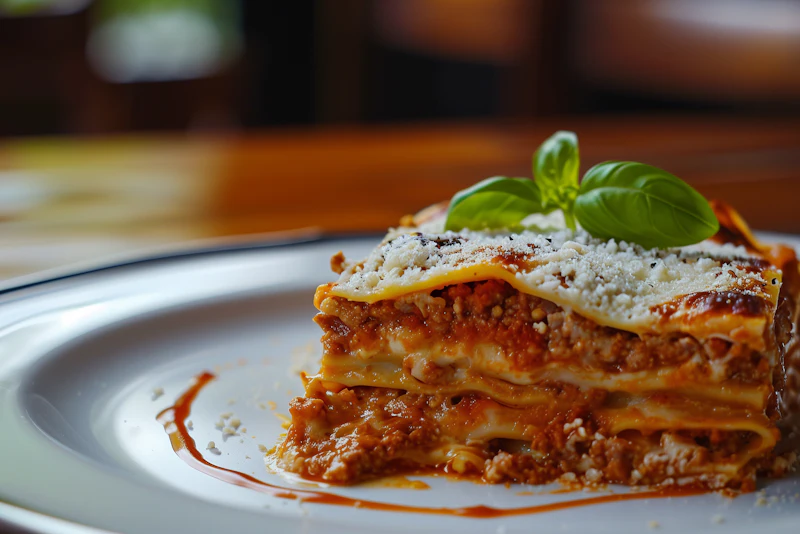
Version of Lasagna

Classic beef lasagna

A slice of beef lasagna on a white plate
  • Against: 500 g of 20% fat beef mince gives about 85 g red meat per serving, close to the single daily serving MEDAS sets as the upper limit.
  • Against: The béchamel uses 50 g butter and 600 ml whole milk, so butter rather than olive oil carries much of the fat.
  • Against: Only 1 tbsp olive oil for six servings, a tiny fraction of the 4 tablespoons a day MEDAS asks for.
Show the full analysisShow less

More reasons

  • Against: About 20 g saturated fat per serving from fatty mince, butter, whole milk, mozzarella and parmesan, roughly the whole daily limit of about 22 g at 10% of energy.
  • Against: Around 2 g salt per serving, mostly from parmesan, mozzarella and added salt, about 40% of the 5 g daily limit.
  • Against: Only about 5 g fibre per serving from passata, onion and white pasta, a fifth of the daily 25 g.
  • For: Onion and garlic are fried in olive oil and simmered with 700 g passata for 30 minutes, a genuine tomato sofrito base.
  • For: Roughly 40 g protein per serving from beef, cheese and milk, and no ultra-processed ingredients.

For this household

  • Sam: Goal missed20% fat mince, 50 g butter, whole milk and 280 g cheese give about 20 g saturated fat per portion.
  • Alex: Goal servedAbout 40 g protein per portion from beef mince, mozzarella, parmesan and milk.
  • Everyone: Practical30 minutes simmering plus 40 minutes baking puts the dish well over the 40-minute weeknight limit.
  • Everyone: PracticalThe recipe serves 6 while the household cooks for 4, so scale to two-thirds or plan leftovers.

Swaps

  1. HighReplace half the beef mince with 250 g canned green lentils (drained) and use 5% fat mince for the rest. Cuts saturated fat and red meat while adding fibre and keeping protein high.
  2. HighMake the white sauce with 3 tbsp olive oil instead of 50 g butter and use semi-skimmed milk. Swaps saturated fat for olive oil, helping Sam's goal and the Mediterranean Fit.
  3. MediumReduce mozzarella to 100 g and parmesan to 40 g. Lowers saturated fat and salt with the topping still golden.

And 3 more in the app.

Lighter beef and lentil lasagna

Serves 4

Ingredients

  • 2 tsp olive oil, for the meat sauce
  • 1 small onion, finely chopped
  • 2 garlic cloves, crushed
  • 165 g lean beef mince (5% fat)
  • 165 g canned green lentils, drained
  • 200 g courgette and spinach, chopped
  • 470 g tomato passata
  • 1.5 tbsp tomato paste
  • 3/4 tsp dried oregano
  • 2 tbsp olive oil, for the white sauce
  • 35 g plain flour
  • 400 ml semi-skimmed milk
  • pinch of nutmeg
  • 8 dried wholewheat lasagna sheets
  • 65 g mozzarella, grated
  • 25 g parmesan, grated
  • salt and pepper, to taste

Method

  1. Heat the oven to 190 °C.
  2. Fry the onion and garlic gently in 2 tsp olive oil until soft, then add the lean mince and brown it.
  3. Stir in the lentils, courgette and spinach, passata, tomato paste and oregano and simmer for 15 minutes.
  4. Meanwhile warm 2 tbsp olive oil in a pan, stir in the flour, then gradually whisk in the semi-skimmed milk until thick. Season with nutmeg, salt and pepper.
  5. In a smaller dish sized for 4, layer meat sauce, wholewheat lasagna sheets and white sauce, repeating to use everything. Top with the mozzarella and parmesan.
  6. Bake for 25 minutes until golden and bubbling, then rest for a few minutes before cutting.
Version of Chicken tikka masala

Chicken tikka masala with rice and naan

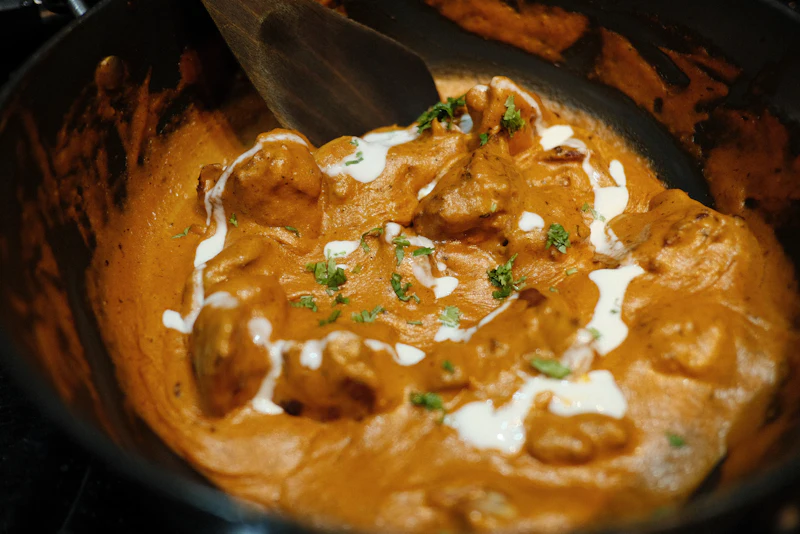
A bowl of creamy chicken tikka masala
  • Against: 200 ml double cream goes into the sauce, about 50 ml per serving, which counts as a full MEDAS serving of cream in one meal.
  • Against: The cooking fat is 2 tbsp vegetable oil rather than olive oil, and cream is the main fat in the sauce.
  • Against: About 17 g saturated fat per serving, mostly from the double cream and chicken thigh skin-side fat, more than the roughly 20 g daily limit's three quarters.
Show the full analysisShow less

More reasons

  • Against: About 2.6 g salt per serving from the added teaspoon of salt and shop-bought naan, over half the daily 5 g limit.
  • Against: Only about 4 g fibre per serving because the rice is white and naan is refined, far below the daily 25 g.
  • For: The protein is 600 g chicken thigh, about 150 g per serving, white meat instead of red or processed meat.
  • For: Onion, garlic and ginger are fried and simmered with 400 g canned tomatoes, a sofrito-style base, though made with vegetable oil.
  • For: About 42 g protein per serving from chicken thighs and yogurt, a substantial share of daily needs.

For this household

  • kids: Constraint broken1 tsp chilli powder in the marinade makes the chicken spicy for the kids.
  • Sam: Goal missedThe 200 ml double cream gives about 17 g saturated fat per portion.
  • Alex: Goal servedAbout 150 g chicken thigh per portion gives roughly 42 g protein.
  • Everyone: PracticalThe 1-hour marinade plus grilling and simmering takes well over the 40-minute weeknight limit.

Swaps

  1. HighLeave out the chilli powder and use mild paprika instead, offering chilli flakes at the table for the adults. Keeps the dish mild for the kids while adults can add heat.
  2. HighReplace the 200 ml double cream with 200 g plain yogurt stirred in off the heat. Cuts saturated fat sharply for Sam while keeping a creamy sauce.
  3. MediumMarinate for 15 minutes or the morning before instead of 1 hour. Brings the cooking time near the 40-minute weeknight limit.

And 3 more in the app.

Chicken tikka masala with chickpeas, spinach and brown rice

Serves 4

Ingredients

  • 600 g boneless chicken thighs, cubed
  • 150 g plain yogurt (for the marinade)
  • 2 tsp garam masala
  • 1 tsp mild paprika
  • 2 tbsp olive oil
  • 1 onion, chopped
  • 3 garlic cloves, crushed
  • 1 tbsp grated ginger
  • 400 g canned chopped tomatoes
  • 400 g can chickpeas, drained and rinsed
  • 200 g spinach
  • 200 g plain yogurt (for the sauce)
  • 1 tbsp sugar
  • 1/2 tsp salt
  • fresh coriander
  • 300 g brown basmati rice
  • chilli flakes, to serve at the table for the adults

Method

  1. Marinate the chicken in 150 g yogurt, half the garam masala and the mild paprika for 15 minutes, or in the morning and keep it in the fridge.
  2. Put the brown basmati rice on to boil according to the packet, usually about 25–30 minutes.
  3. Grill the chicken until charred and cooked through.
  4. Fry the onion, garlic and ginger in the olive oil until soft, add the rest of the garam masala, the tomatoes, chickpeas, sugar and salt and simmer for 15 minutes.
  5. Add the chicken and the spinach and simmer for 5 minutes until the spinach wilts.
  6. Take the pan off the heat and stir in the 200 g yogurt so it doesn't split. Top with coriander.
  7. Serve with the brown rice, with chilli flakes on the table for the adults.

For this household

  • Alex can take an extra spoonful of chicken and chickpeas for more protein.
  • Keep the kids' portions free of chilli flakes; adults add their own at the table.
Version of Mac and cheese

Baked mac and cheese

Baked mac and cheese in a casserole dish
  • Against: The sauce is built on 50 g butter (about 12 g per serving) plus 700 ml whole milk and 250 g cheddar, with no olive oil at all.
  • Against: Butter is the only cooking fat, so olive oil contributes nothing towards the 4 tablespoons a day MEDAS asks for.
  • Against: There are no vegetables in the dish, so it adds nothing to the 2+ daily vegetable servings.
Show the full analysisShow less

More reasons

  • Against: About 30 g saturated fat per serving, from 62 g cheddar, 12 g butter and 175 ml whole milk each; that is well above the roughly 22 g daily limit (10% of energy).
  • Against: About 2.4 g salt per serving, mostly from cheddar, breadcrumbs and seasoning, nearly half the daily 5 g limit.
  • Against: Only about 4 g fibre per serving from white macaroni and breadcrumbs, a small fraction of the daily 25 g.
  • For: The dish contains no red or processed meat.
  • For: Around 38 g protein per serving from cheddar, milk and pasta, a solid share of daily needs.

For this household

  • Sam: Goal missedAbout 30 g saturated fat per portion from 250 g cheddar, 50 g butter and whole milk works directly against Sam's goal of less saturated fat.
  • Alex: Goal servedRoughly 38 g protein per portion from cheddar, milk and pasta supports Alex's protein goal.
  • the kids: PracticalThe 1 tsp English mustard adds some heat; it is mild once baked, but halve it or use mild mustard for the kids.
  • Everyone: PracticalBoiling pasta, making the sauce and 20 minutes baking fits roughly within the 40-minute weeknight limit.

Swaps

  1. HighReplace the 50 g butter with 3 tbsp olive oil for the roux. Cuts saturated fat and makes olive oil the main fat.
  2. HighReduce the cheddar from 250 g to 150 g and use semi-skimmed milk instead of whole milk. Lowers saturated fat and salt substantially, helping Sam's goal.
  3. MediumStir in 300 g steamed broccoli or cauliflower and a handful of peas before baking. Adds vegetables and fibre to a dish that has none.

And 3 more in the app.

Baked mac and cheese with broccoli and white beans

Serves 4

Ingredients

  • 350 g wholewheat macaroni
  • 3 tbsp olive oil
  • 40 g plain flour
  • 700 ml semi-skimmed milk
  • 150 g mature cheddar, grated
  • 1/2 tsp mild Dijon mustard (optional)
  • 1 x 400 g tin white beans, drained
  • 300 g broccoli or cauliflower florets
  • 80 g frozen peas (a handful)
  • 50 g white breadcrumbs
  • salt and pepper

Method

  1. Heat the oven to 200 °C.
  2. Cook the wholewheat macaroni until just tender, adding the broccoli or cauliflower for the last 4 minutes and the peas for the last minute, then drain.
  3. Warm the olive oil in a pan, stir in the flour and cook for a minute, then gradually whisk in the semi-skimmed milk until the sauce is smooth and thick.
  4. Stir in the mild Dijon mustard if using, 110 g of the cheddar and the drained white beans, then season lightly with salt and pepper.
  5. Mix the sauce with the macaroni and vegetables, pour into a baking dish, and top with the breadcrumbs and the remaining 40 g cheddar.
  6. Bake for 20 minutes until golden and bubbling.

For this household

  • Alex can take a larger scoop with extra beans for more protein.
Version of Shakshuka

Shakshuka

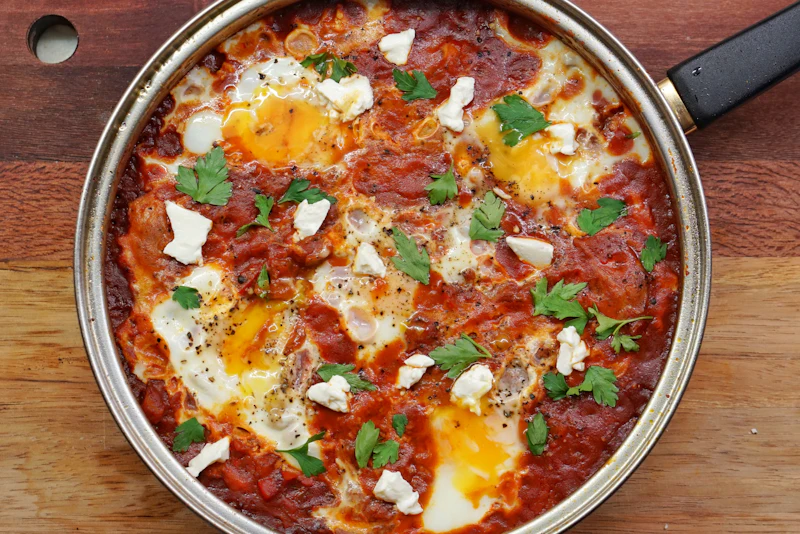
A pan of shakshuka with eggs, feta and parsley
  • For: Onion, red peppers and garlic are softened in olive oil for 10 minutes and then simmered with 800 g tomatoes, a classic sofrito base that counts towards the 2 weekly servings.
  • For: About 200 g tomatoes plus half a pepper and a quarter onion per serving give roughly two vegetable servings, meeting the MEDAS daily target in one dish.
  • For: 3 tbsp olive oil is the only cooking fat, about 0.75 tbsp per serving towards the 4 daily tablespoons MEDAS asks for.
Show the full analysisShow less

More reasons

  • For: The protein comes from eggs and feta, with no red or processed meat at all.
  • For: About 6 g fibre per serving from tomatoes, peppers and onion, nearly a quarter of the daily 25 g.
  • For: About 21 g protein per serving from 1.5 eggs and 25 g feta, and the dish is built on whole vegetables with no ultra-processed ingredients.
  • Against: About 2.2 g salt per serving from feta, canned tomatoes, added salt and white bread, over 40% of the daily 5 g limit.
  • Against: About 7 g saturated fat per serving, mostly from feta and egg yolks, roughly a third of the daily limit for a 2000 kcal diet.

For this household

  • Sam: Goal missedThe 100 g feta and egg yolks bring about 7 g saturated fat per portion, working against Sam's aim to cut saturated fat.
  • Alex: Goal servedSix eggs and 100 g feta give about 21 g protein per portion, a solid contribution to Alex's protein goal.
  • Everyone: PracticalThe dish uses only sweet paprika and cumin with no chilli, so it should suit the kids, and at about 35 minutes it fits the 40-minute weeknight limit.

Swaps

  1. HighStir a 400 g can of drained chickpeas into the sauce with the tomatoes. Adds legumes, fibre and plant protein for Alex without extra saturated fat.
  2. MediumHalve the feta to 50 g, or serve it on the side so Sam can skip it. Cuts saturated fat and salt, supporting Sam's goal.
  3. MediumSwap the white crusty bread for wholemeal or wholegrain bread. Raises fibre and lowers the glycaemic load.

And 2 more in the app.

Shakshuka with Chickpeas and Spinach

Serves 4

Ingredients

  • 3 tbsp olive oil
  • 1 onion, sliced
  • 2 red peppers, sliced
  • 3 garlic cloves, sliced
  • 1 tsp ground cumin
  • 1 tsp sweet paprika
  • 800 g no-salt-added canned chopped tomatoes
  • 1 x 400 g can chickpeas, drained
  • 150 g spinach
  • 6 eggs
  • 50 g feta, crumbled (or served on the side)
  • a handful of parsley, chopped
  • a pinch of salt
  • black pepper, to taste
  • 4 slices of wholemeal or wholegrain bread, to serve

Method

  1. Soften the onion and peppers in the olive oil over a medium heat for 10 minutes, then add the garlic, cumin and paprika and cook for 1 minute.
  2. Add the no-salt-added tomatoes and the drained chickpeas and simmer for 15 minutes until thick.
  3. Stir in the spinach until wilted, then season with a pinch of salt and some pepper.
  4. Make six hollows in the sauce, crack in the eggs, cover and cook until the whites are set.
  5. Scatter over the parsley and the feta, or serve the feta on the side so anyone can skip it, and serve with the wholemeal bread.

For this household

  • Serve Sam's portion without feta, or with the feta on the side, to keep his saturated fat lower.
  • Give Alex two eggs and a generous ladle of chickpeas for extra protein.
  • The sauce uses sweet paprika only, so it stays mild for the kids; give them smaller portions as needed.
Version of Greek salad

Greek salad

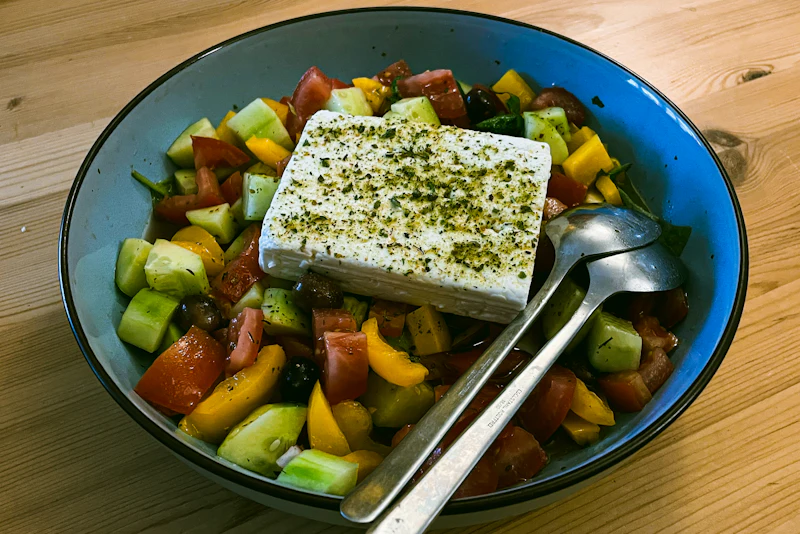
A Greek salad topped with a block of feta and oregano
  • For: Tomatoes, cucumber, green pepper and red onion make up most of the dish, roughly 250 g of vegetables per serving, more than one of the 2 daily MEDAS servings.
  • For: Extra virgin olive oil is the only added fat, used as the dressing.
  • For: 4 tbsp olive oil across 4 servings gives 1 tbsp each, a quarter of the 4 daily tablespoons MEDAS asks for.
Show the full analysisShow less

More reasons

  • For: The dish contains no red or processed meat at all.
  • For: Raw vegetables give about 3 g fibre per serving plus vitamin C and potassium, with very little sugar.
  • For: Olive oil provides mostly monounsaturated fat, and there are no ultra-processed ingredients.
  • Against: About 2.5 g salt per serving from 50 g feta, 25 g olives and added salt, half the WHO daily 5 g limit for a side dish.
  • Against: About 8 g saturated fat per serving, mostly from the feta, over a third of a typical 20 g daily limit.

For this household

  • Alex: Goal missedAt about 9 g protein per portion, mostly from 50 g feta, this side salad does little for Alex's protein goal.
  • Sam: Goal missedThe 200 g block of feta gives about 8 g saturated fat per portion, working against Sam's goal.
  • Everyone: PracticalIt serves 4 only as a side, so it needs a main or added protein to be a weeknight dinner, though it takes just 15 minutes.

Swaps

  1. HighAdd a 400 g can of drained chickpeas to the bowl. Adds about 5 g protein and 4 g fibre per portion and a legume serving, turning the side into a meal.
  2. HighReduce the feta from 200 g to 100 g, crumbled over the top. Halves the saturated fat and cuts salt by about 0.7 g per portion while keeping the flavour.
  3. MediumServe with 400 g grilled chicken breast or tinned tuna on the side. Gives Alex roughly 25 g extra protein per portion with little saturated fat.

And 1 more in the app.

Greek salad with chickpeas and chicken or tuna

Serves 4

Ingredients

  • 4 ripe tomatoes, cut into wedges
  • 1 cucumber, sliced
  • 1 green pepper, sliced
  • 1 red onion, thinly sliced
  • 400 g can chickpeas, drained and rinsed
  • 100 g kalamata olives
  • 100 g feta, crumbled
  • 4 tbsp extra virgin olive oil
  • 1 tbsp red wine vinegar
  • 1 tsp dried oregano
  • 400 g chicken breast, grilled, or tinned tuna, drained

Method

  1. If using chicken, grill the chicken breast for 6–8 minutes per side until cooked through, rest for 5 minutes and slice; if using tuna, drain it and flake into chunks.
  2. Put the tomatoes, cucumber, pepper, onion, chickpeas and olives in a bowl; don't add salt, as the feta and olives season the salad.
  3. Crumble the feta over the top, sprinkle with oregano, and dress with the olive oil and vinegar.
  4. Serve with the grilled chicken or tuna on the side.

For this household

  • Alex can take a larger share of the chicken or tuna for extra protein.
  • Sam can go lighter on the feta to cut saturated fat further.

Photos from Unsplash by Rob Wicks, Emanuel Ekström, Raman, David Trinks, amirali mirhashemian and Jametlene Reskp.

For cooks who want to eat more Mediterranean without starting over

You've been told to eat Mediterranean

By a doctor, a dietitian or an article, and every recipe online calls itself healthy. Five Olives tells you which ones actually fit, and why.

You cook for people who don't all want to change

Write down who's eating, what they never eat and what they're working towards. Every recipe is checked against all of them, so nobody's rule gets lost.

You love your recipes as they are, almost

Keep the lasagna. Five Olives shows the few changes that matter most and rewrites the recipe with them, ready to cook tonight.

How it works

  1. Paste a recipe

    A link from any recipe site, or the text from a cookbook, a card or your notes.

  2. Read the three verdicts

    Mediterranean Fit and Health Rating, each out of 5, and Household Fit for the people at your table. Every one comes with its reasons.

  3. Cook the healthier version

    Swaps ranked by how much they help, and the whole recipe rewritten for your usual number of servings.

What the verdicts are based on

Mediterranean Fit
MEDAS, the 14-point Mediterranean Diet Adherence Screener from the PREDIMED trial. Olive oil, vegetables, legumes, fish and nuts count for a recipe. Butter, cream, red and processed meat and sugar count against it.
Health Rating
Estimated nutrients per serving against everyday reference values, and how processed the ingredients are, using the NOVA groups.
Household Fit
What you wrote about the people you cook for. It's a list of findings, never a score, so a broken rule can't be averaged away.

Your household stays on your phone

There's no account, no sign-up and no email. Your household's details and your saved recipes are stored on your iPhone. They're sent only to analyse a recipe, and Five Olives doesn't keep them. No ads, no tracking, nothing sold.

How Five Olives handles your data

Common questions

How much does it cost?

Your first 3 analyses are free. After that, a monthly or yearly subscription keeps them coming. The price for your country is shown in the app before you buy, and you can cancel any time in your iPhone's settings.

Does it work with any recipe?

With a link from most recipe sites, or with pasted text from anywhere. If a site can't be read, paste the ingredients and method instead.

Who writes the analysis?

AI (Claude, made by Anthropic), following fixed rules: MEDAS for Mediterranean Fit, nutrients and NOVA for the Health Rating. It's careful and can still be wrong, so check ingredient lists yourself when an allergy is involved.

Is this medical advice?

No. Five Olives gives general information about food. If you change your diet for a health reason, check with your doctor or a registered dietitian.

Do I need an account?

No. There's no sign-up. Your household's details and your saved recipes stay on your iPhone, and a subscription is tied to your Apple ID.

Is there an Android version?

Not yet. Five Olives is for iPhone, in the United States, the United Kingdom, Canada and Australia.

More answers on the support page.

Find out what your favourite recipe scores

3 free analyses. No account, no card.

Coming soon to theApp Store